Op. Dr. Ahmet Arslanoğlu
Op. Dr. Ahmet Arslanoğlu

Istanbul has many clinicians and organisations offering rhinoplasty. Begin with facts that can be checked independently, not advertising reach. Verify the doctor’s identity and specialty through official Turkish sources such as the Ministry of Health Doctor Information Bank. Check whether a provider treating international patients appears on the Ministry’s current list of organisations holding an International Health Tourism Authorisation Certificate.
These records do not guarantee a particular outcome, but they are a basic identity and authorisation check. Obtain the hospital’s name, the operating location and information about the anaesthesia team before paying a deposit. GOV.UK notes that healthcare standards in Turkey can vary, recommends independent research and makes clear that official information is not a government endorsement of an individual clinician’s competence.
A patient coordinator can organise documents and travel, but should not determine surgical suitability. The operating surgeon should join the video consultation and discuss your appearance and breathing goals, previous nasal injury, surgery or filler, medical conditions, allergies, medicines and supplements, and smoking or nicotine use.
ASPS consultation guidance includes reviewing cosmetic and breathing goals, health conditions, medicines and prior operations, along with examination, measurements, photographs, options and risks. Remote assessment can be useful, yet examination of skin, septum, cartilage strength and nasal valves in Istanbul may change the plan. Ask how that possibility affects cancellation, payment and your right to decline a revised proposal.
Leave unpressured time between the first consultation and payment or surgery. NHS guidance for cosmetic surgery abroad encourages patients to have more than one consultation and to consider the cooling-off period normally offered in the UK, usually around two weeks. This is not paperwork; it is time to compare options, understand risks, review travel conditions and test the budget.
A same-day discount should not drive an irreversible medical decision. A surgeon who advises against surgery or proposes less change may be demonstrating sound judgment. It is also important not to expect a new nose to resolve every concern about confidence, relationships or wellbeing.
Create an English health summary listing diagnoses, previous procedures, anaesthetic problems, allergies, regular and occasional medicines, vitamins and herbal supplements. Disclose bleeding or clotting history, sleep apnoea, heart or lung disease and any possibility of pregnancy. Do not stop or start prescribed medication on your own; follow written instructions from the surgeon and anaesthesia team.
Nicotine can affect healing. Ask for a clear plan covering cigarettes, vaping, nicotine pouches and replacement products. Individual risk should be assessed rather than relying on a generic message that a few days is enough. Where appropriate, speak to your GP or relevant UK specialist before travel.
Choose flights around assessment and follow-up, not price alone. There should be enough time after arrival for in-person examination, anaesthetic review and tests. Landing and proceeding directly to surgery leaves little room for delays, fasting instructions, fatigue or a change in plan.
Your itinerary should include the operation, hospital observation, early reviews, splint or suture care and a fitness-to-fly decision. Ask the provider to state the clinically recommended number of nights and the urgent contact pathway. Sightseeing, heavy shopping, alcohol, sun exposure and physical exertion should not displace the recovery plan.
A responsible adult can be valuable in the early period after general anaesthesia, and some facilities may require one. Their role is not to make clinical decisions but to help you follow instructions, remember medication times, travel safely and communicate. If you plan to travel alone, ask about the discharge policy before booking.
Accommodation should provide practical access to the hospital, a calm environment, cleanliness and an option that does not depend on stairs. Extra pillows, water, refrigeration and simple food access may help. A luxury hotel does not demonstrate clinical quality. Ask what happens to cost and availability if your stay must be extended.
The surgeon should assess you in person and explain the final plan before surgery. Seeing the consent form for the first time moments before sedation is not adequate preparation. You should understand the intended cosmetic changes, functional procedures, possible graft source, open or closed approach, foreseeable risks and alternatives. A simulation can communicate direction; it is not a promise of the exact result.
Keep the hospital and surgeon names, anaesthesia details, urgent contact and discharge plan in your records. If documents are provided in a language you do not understand, request an explanation and reliable translation. An English-speaking coordinator can help, but you also need direct, understandable communication with the surgeon.
Swelling, bruising, blockage, altered sensation, stiffness and a small amount of blood-stained discharge can occur after rhinoplasty. The NHS notes that the full effect takes months and swelling can last up to six months. Appearance in the first week is not the final result, and the two sides may not settle at the same rate.
The provider should give written instructions identifying symptoms that require urgent review. Increasing uncontrolled bleeding, severe breathing difficulty, chest pain, fainting, one-sided leg swelling, high fever, rapidly worsening pain or a new visual problem should not be managed by waiting indefinitely for a message reply; seek emergency medical care. Save the local emergency number and hospital address.
Air travel and major surgery can affect clot risk. General NHS guidance advises avoiding flying for around 7–10 days after facial cosmetic procedures. This is a broad minimum framework, not clearance for every patient. The extent of surgery, personal risk, bleeding or infection and flight duration may justify a longer stay. Combine the surgeon’s fitness-to-fly assessment with airline rules.
The airline may request a fit-to-fly letter. Ask who issues it, when and whether there is a fee. Follow individual advice from the surgeon and anaesthesia team about movement, hydration, compression garments or medication. Do not self-prescribe an anticoagulant based on internet advice.
Before leaving, obtain an operative note or summary in English, the discharge letter, generic names and doses of medicines, details of any implant or special material, test results, relevant photographs and urgent contact information. The schedule for remote reviews, required photo angles and the route to an in-person examination in the UK should be clear.
The NHS warns that overseas providers may not offer follow-up or have a professional available in the UK. The NHS can respond to urgent clinical needs, but patients should not assume it will provide routine private cosmetic follow-up or correct an unsatisfactory result. Continuity must therefore be designed before booking.
GHIC and EHIC are not valid in Turkey. Standard travel insurance may exclude planned elective surgery, its complications and medical repatriation. Do not rely on a policy merely because Turkey is listed as a destination; tell the insurer the purpose of travel and obtain written confirmation of relevant cover.
Maintain accessible funds for extra nights, a replacement flight, private assessment or companion costs. If the clinic offers a complication policy, read which events, period and expenses it covers. A verbal assurance is not a substitute for written terms.
Six to twelve weeks or more before travel: Verify providers, consult surgeons, disclose medical history, compare written plans and allow time to think. Two to six weeks before travel: Complete requested medical reviews, follow medication and nicotine instructions, confirm insurance, flights and accommodation. On arrival: Attend in-person examination, testing and anaesthetic review; ensure the final plan still matches your informed choice. After surgery: Follow medication and wound-care instructions, attend every planned review and keep urgent contacts available. Before the return flight: Obtain individual clearance, check airline requirements and collect the complete English record. Back in the UK: Keep remote appointments, report new or worsening symptoms promptly and use local emergency services when needed.
The phrase “rhinoplasty journey UK to Istanbul” describes more than an operation day; it is a cross-border continuity-of-care problem. A safer journey depends on verified clinical identities, direct communication, unpressured consent, a realistic recovery schedule, individual flight timing and a complete follow-up record.
Whether considering AA Clinic or another Istanbul provider, assess medical accountability as closely as travel convenience. A coherent pathway leaves no ambiguity about who to contact, when and for what reason. Online guidance cannot replace personal examination; final decisions about surgery and travel belong with your surgeon, anaesthesia team and, when relevant, your UK clinician.
Not for every case. There must be sufficient time for examination, testing and anaesthetic assessment. Let the clinical team define the schedule.
Early recovery requires rest and review. Sightseeing, sun, crowds and exertion may be unsuitable. Plan a medical journey, not a holiday itinerary.
General NHS guidance suggests avoiding flying for around 7–10 days after facial cosmetic surgery. Your surgeon may recommend longer according to your operation and risks, and the airline may request documentation.
Use local emergency services for urgent symptoms. You should also have a 24-hour route to the Istanbul team and a defined routine follow-up plan before booking.
You can browse our current news and blog posts on aesthetic applications and beauty.
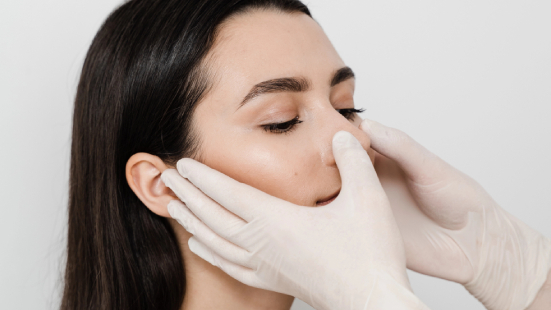
A “Barbie nose,” revision rhinoplasty and functional rhinoplasty are not interchangeable procedures. Barbie nose is a social-media description usually associated with a small, refined and noticeably rotated tip; it is not a formal diagnosis or a standard operation suitable for every face. Revision surgery addresses appearance or breathing concerns after a previous operation. Functional rhinoplasty aims to improve structural causes of impaired airflow and may be combined with aesthetic change. The right pathway comes from anatomy, airway function, safe limits and relevant surgical experience—not a trend label.
READ ALL ABOUT IT
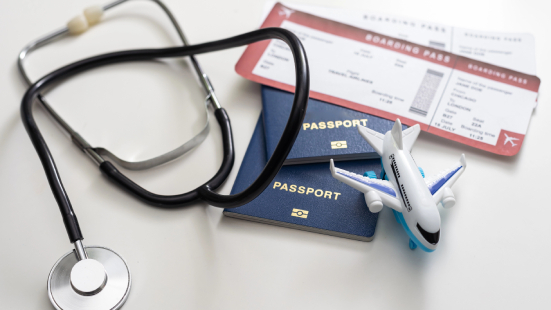
A safer rhinoplasty journey from the UK to Istanbul starts well before the operation date. Verify the surgeon and provider, consult the operating surgeon directly, disclose your health history, allow a genuine cooling-off period, plan flights and insurance around surgery, and obtain a written follow-up pathway for your return to the UK. Combining surgery with a holiday or booking the earliest possible flight home can undermine recovery.
READ ALL ABOUT IT
 0 532 529 83 66
 Yenibosna Merkez Mahallesi 1. Asena Sokak No:23 Karat 34 Residence D Blok Daire:39
 GET DIRECTIONS
 info@aaclinic.com.tr
FOLLOW US ON SOCIAL MEDIA
info@aaclinic.com.tr
FOLLOW US ON SOCIAL MEDIA